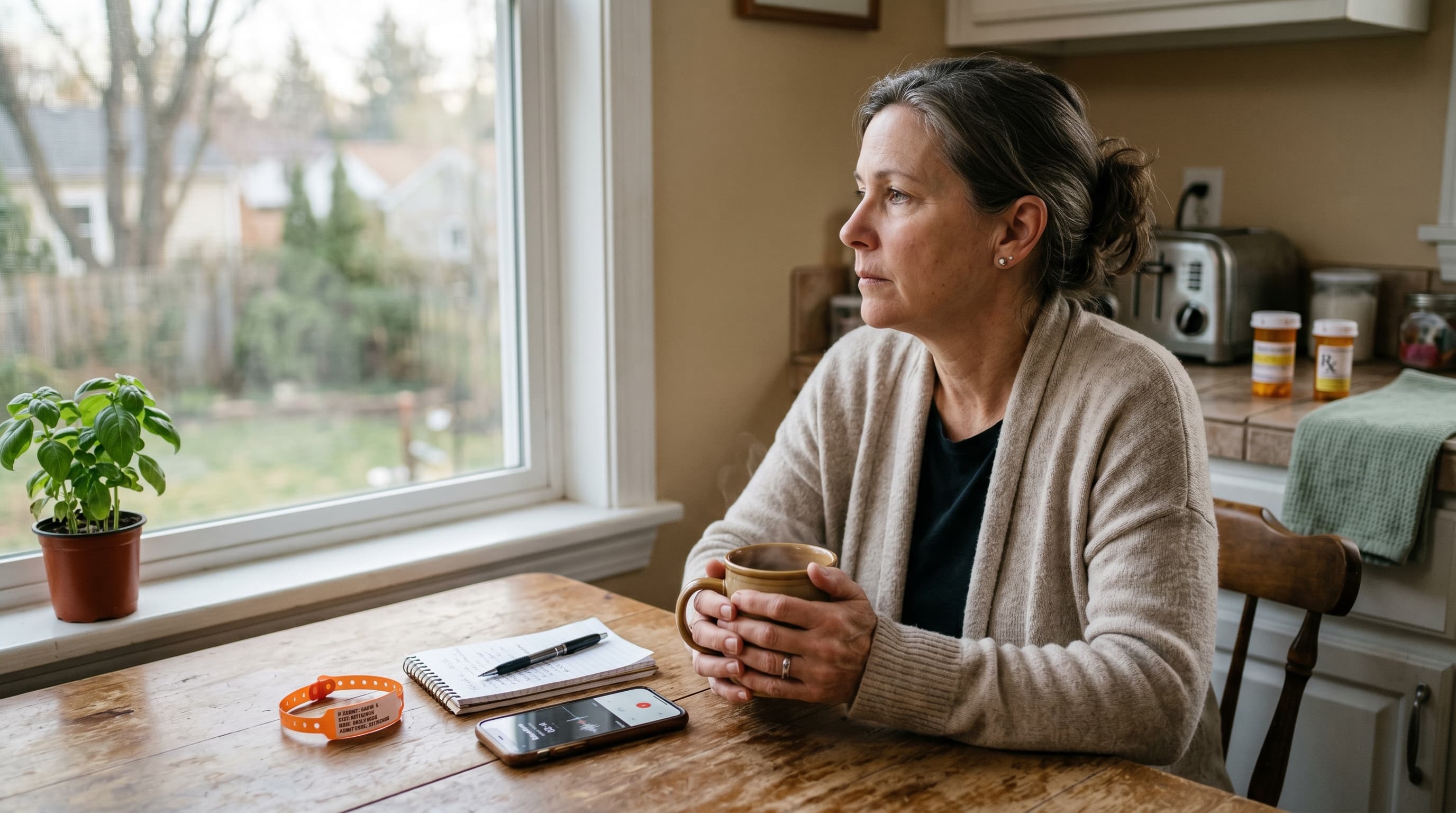
If you're reading this, you probably don't have a "time to reflect" problem. You have a "the medication wasn't ready at noon" problem, a "another restless night" problem, an "I don't recognise myself anymore" problem. This article is not a guide for the well-rested. It's for people caring for a family member who are looking for a small practice that gives back — that doesn't only cost energy.
The invisible burden — and why it's measurable
Caring for a family member is one of the most intense phases a person can go through. Studies using the Zarit Burden Interview — an established instrument for measuring caregiver burden — show consistently: family caregivers have higher rates of depression and anxiety, worse sleep, more frequent back pain, and measurable elevations in inflammatory markers in the blood. That's not weakness — that's biology.
What helps? The research is surprisingly clear: many small, regular moments of relief work better than one large vacation per year. Social connection, short writing or speaking rituals, regular movement — meta-analyses show small to moderate but stable effects. The point: what you need isn't "to do more," it's "to show up regularly."
Why memory work helps here
Memory work — conscious remembering and capturing — works in several directions at once. For the person being cared for it is activating, identity-supporting, often mood-lifting (see the Cochrane review on reminiscence therapy, 2018). For you as a caregiver, it brings back something that often gets lost in acute care: the reminder of who this person is beyond their current state — and who you yourself were in the relationship.
Psychologically, telling a story together with someone you love activates what attachment research calls "shared positive affect" — a positive feeling experienced together. In attachment theory (John Bowlby, later Mary Main, Stuart Hauser), this is described as foundational to relationship quality, including in late life. It isn't "just" nostalgia. It's care on a level that has little to do with provision.
Concrete routines that work in everyday life
The three-minute recording. Once a week, always on the same day — for instance Sunday morning with coffee. In blyven, pick a question from the Reminiscence Storybook, or record freely. Three minutes. No more. This mini-practice is doable even when energy is low. Over months it becomes an audio diary that turns out priceless later — blyven sorts recordings chronologically and makes them searchable through transcription (on paid plans).
The two-minute note to yourself. Right after: two minutes alone, a private recording in blyven without sharing to the family circle. What surprised you today? What was hard? You'll probably never listen to those recordings again — but speaking the difficulty aloud is demonstrably relieving (James Pennebaker's research on "expressive writing," consistent results since the 1980s). Private recordings in blyven stay visible only to you.
When the energy is low
There are weeks when nothing works. No routine, no ritual, no recording. That's normal. Caregiving self-efficacy (in Albert Bandura's sense) isn't built through discipline during acute phases, it's built through the quiet knowledge: "I can come back when it gets easier." Don't pressure yourself. Let the routine pause when needed.
And: seek professional support if you haven't already. Local caregiver advice services (Pflegestützpunkte) consult for free; many statutory health and care insurers fund caregiver training and self-help groups. Caregivers who speak with someone outside their household every few months — professionally or in a group — show significantly lower exhaustion in longitudinal studies.
A quiet sentence at the end
You do more than you yourself see. Memory work replaces nothing — not sleep, not external help, not an honest break. But it can become a small, recurring point in the day where you remember something that lies beyond acute caregiving. This relationship. This story. The fact that you yourself are in it.
blyven
Three minutes on Sunday
Pick a Storybook and a question — or record freely. blyven stores encrypted, sorts chronologically, and shares only what you release.
Start your first recordingRead next
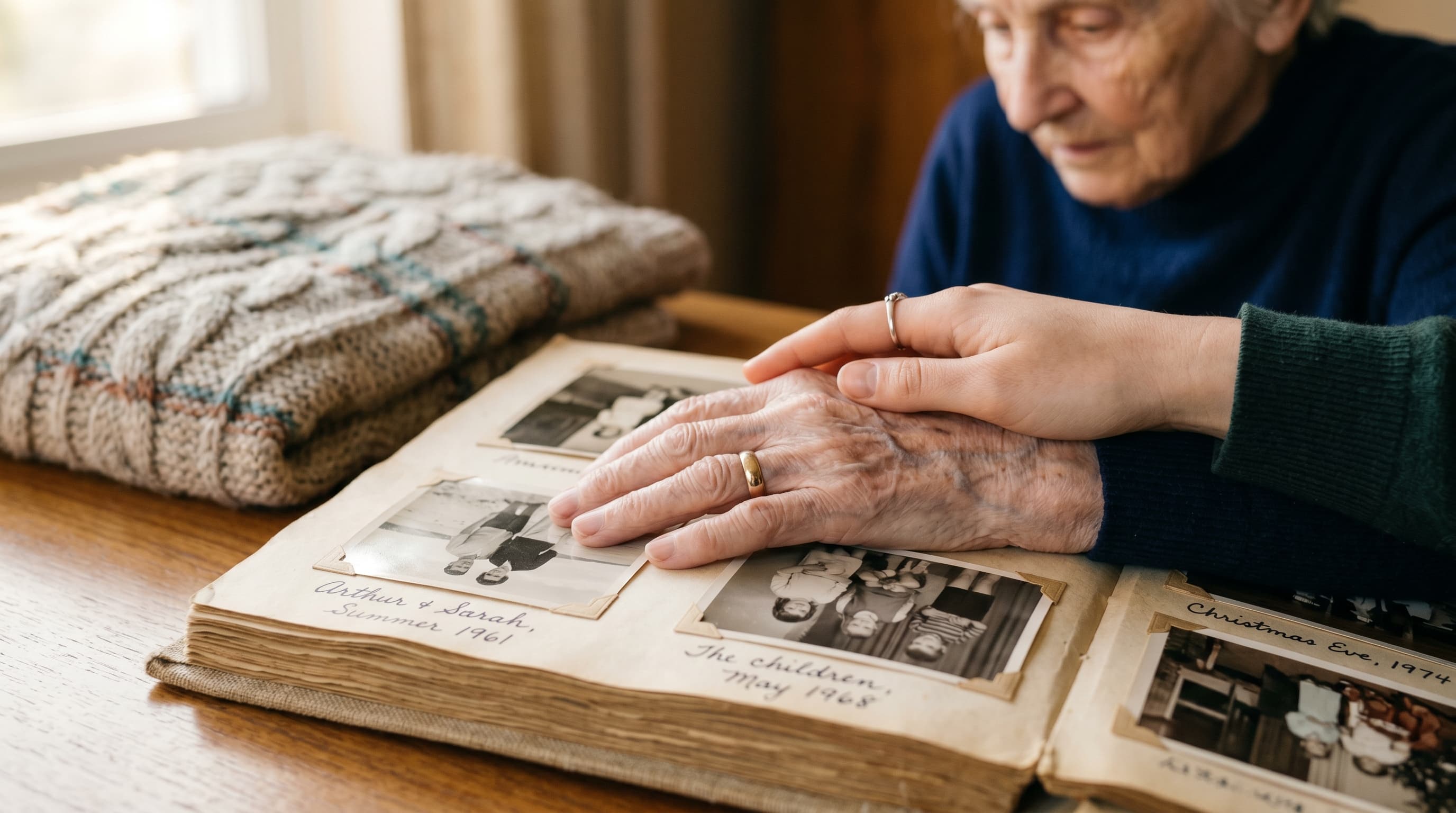
Dementia and Preserving Memories: What Families Should Know
Dementia doesn't erase memory evenly. Which memories tend to last longest, when's the right time to record, and how families can proceed sensitively.
Read more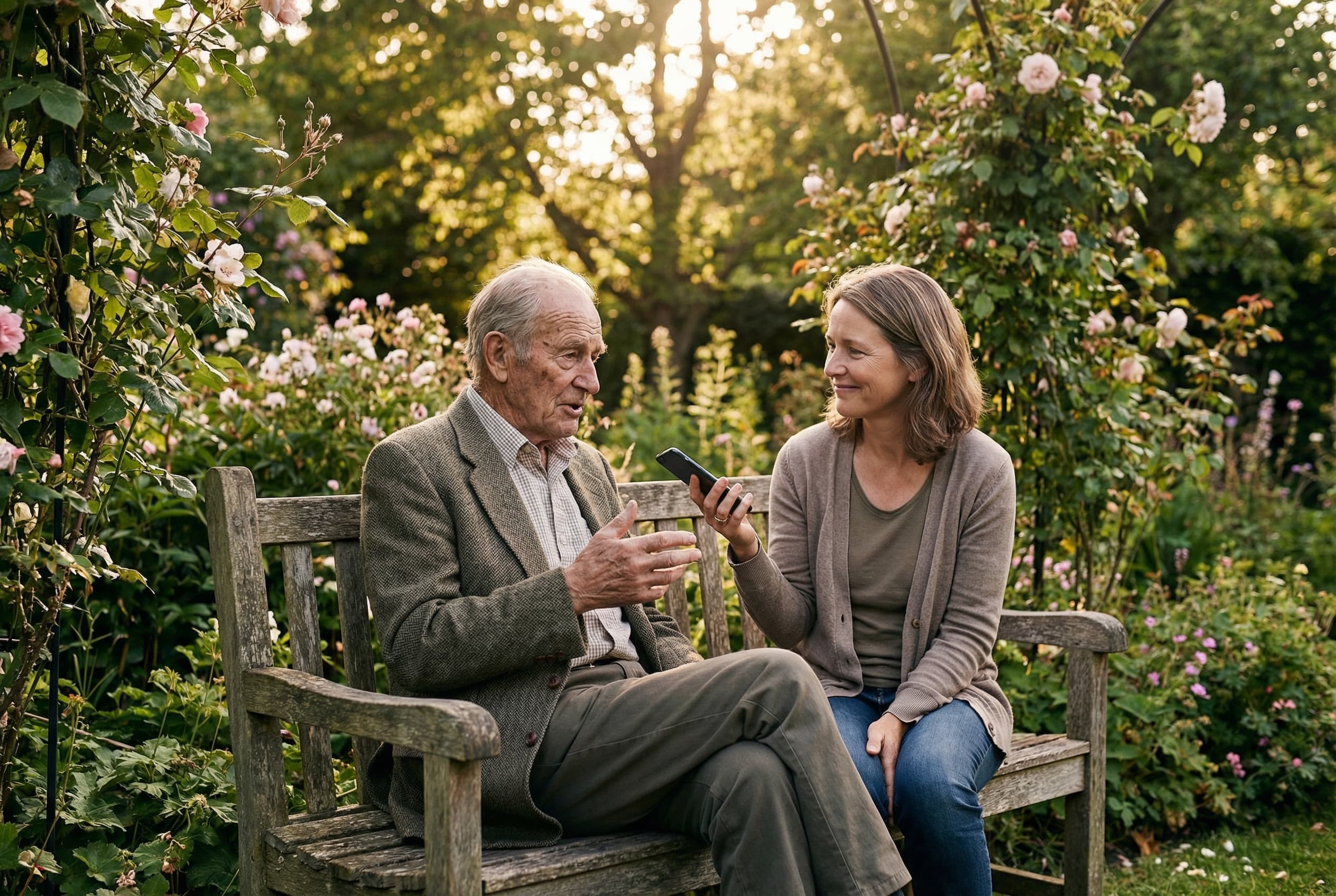
Biography Work: Understanding the Past to Shape the Future
What professionals call "biography work" can transform family conversations too — and it starts with a single question.
Read more
Biographical Work in Care Homes: How Teams Preserve Life Stories
How care teams sustainably embed biographical work in daily practice, what the SIS contributes, and where voice recordings add concrete value.
Read more