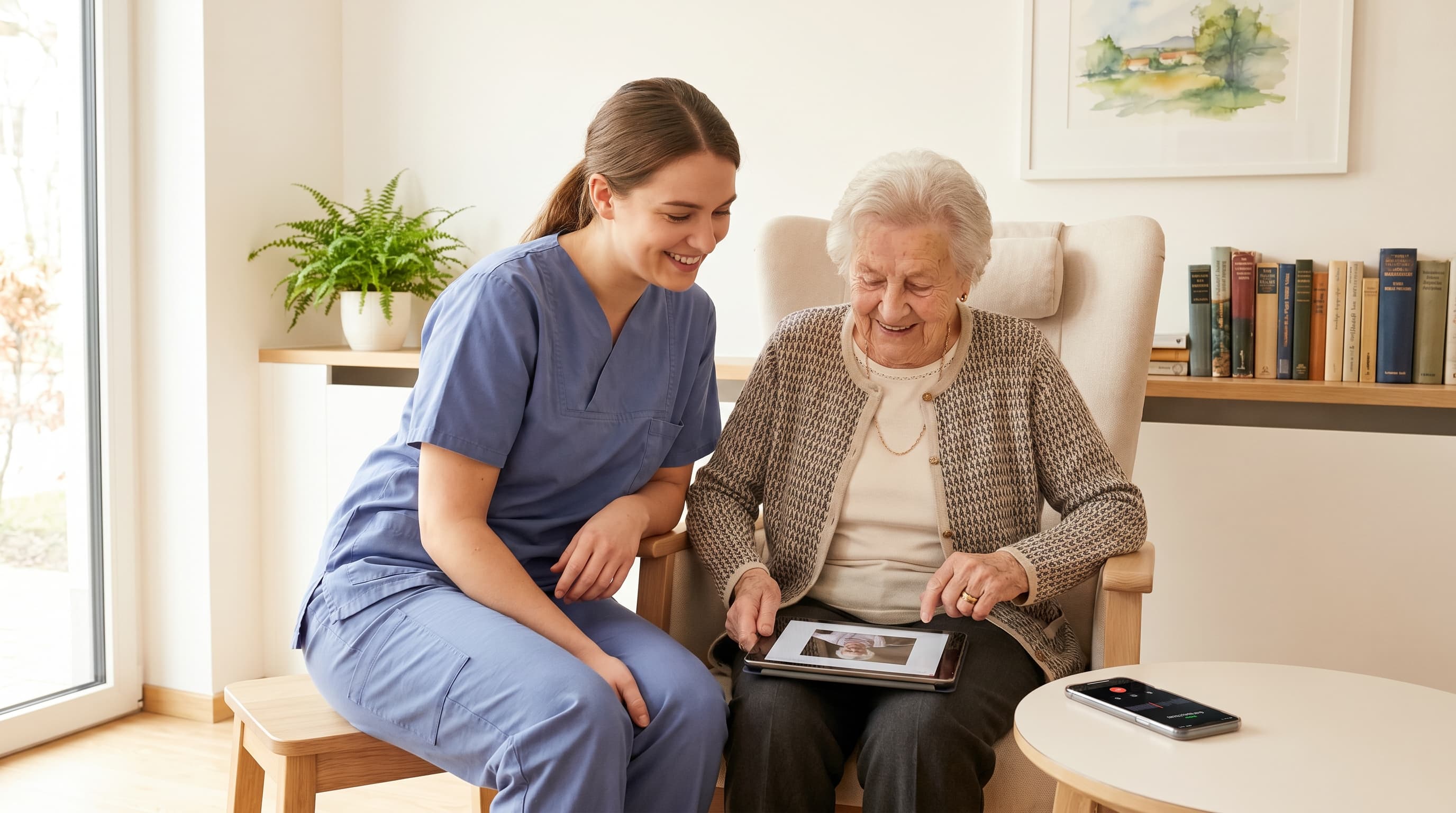
If you work as a nurse or carer in residential care, "biographical work" is probably not new to you. It's in MDK quality audits, in the SIS (Strukturierte Informationssammlung), in the policies of almost every provider. What's harder is actually living it day-to-day, with twelve residents per early shift and three care reviews per week. This article doesn't try to re-explain the concept — it offers concrete hints for where voice recordings can be a useful tool in service of it.
What biographical work in care really is
Biographical work as defined by Hubert Klingenberger is a structured, relationship-oriented engagement with a person's life story — with the aim of better understanding their world and behaviour, and aligning care accordingly. Erwin Böhm developed this further in the Psychobiographical Care Model: behaviour in dementia becomes more understandable when one knows the formative experiences of the first 25 years of life. Both approaches are well established in German-speaking care and are anchored in many facility concepts.
In daily care, you encounter biographical work most often through the SIS — Themenfeld 5 covers life story and biographical key events. In practice that field is often thinly populated, because it takes time, because relatives aren't always reachable, and because the resident is often already mid-dementia at move-in. This is precisely where voice recordings — from the resident, or from family members — can fill a gap.
How care teams use biographical work sustainably
A common pattern: biography is captured once at move-in and then sits dormant. Biographical work becomes sustainable only when it regularly surfaces in care reviews, case discussions, and handovers. That doesn't mean every team member must know everything — it means relevant biographical information with care-relevance is documented and reachable at the right moment. "Ms M. was a child during the war and shivered while fleeing, and to this day dislikes cold rooms" is care-actionable information.
Voice recordings change the character of that information. A two-minute clip in which a resident — or her daughter, about her mother — describes a formative experience is faster to use during a shift than a ten-page biography sheet, and it lands differently. blyven is built for exactly this use case: staff hear the resident's voice "from before" — especially when the person speaks little today. AI transcription makes every recording searchable, so relevant passages are found in seconds.
It helps to think of recordings categorically rather than chronologically: phases of childhood, formative experiences, life themes, likes and dislikes, rituals, religious context. blyven delivers this structure ready-made — the 1,500+ guided questions are organised into themed Storybooks that map directly to SIS Themenfeld 5. Recordings can be listened to in 30–60 seconds, for instance before care planning or in preparation for a challenging care situation.
Benefits for residents, families, and the team
For residents, the act of telling — while still possible — supports identity. In person-centred care research (Tom Kitwood), this is described as "personhood-supporting": the person becomes visible as the bearer of their own story, not reduced to diagnosis and care level. Several studies in early dementia have shown that biography-based interventions measurably improve well-being (measured via QUALIDEM or the Cornell Scale).
For families, biographical work is an often underestimated transitional space. Many struggle with the move into care — guilt, helplessness, loss of role. The concrete task "please tell me three stories about your mother that might matter to the team" gives them a role back, and the recordings that emerge often turn out to matter more to the family itself than they expected.
Data protection, dignity, and the special case of dementia
Voice recordings are particularly sensitive personal data. GDPR fundamentals apply: consent, purpose limitation, data minimisation, deletion plan. blyven addresses this systematically: EU hosting in Frankfurt, end-to-end encryption, granular access permissions, a data-processing agreement provided as standard. On Team plans, you centrally manage which staff can access which resident's data — residents and families own the recordings, the facility receives only what is explicitly released for care purposes.
In dementia, consent becomes more complex. Early consent ("yes, you may use this") isn't timeless — it must remain plausible against the person's observable behaviour. If a resident shows visible stress when their own recording plays, that's a clear stop signal, even with formal consent in place. "Informed assent" — the felt, present-moment agreement — is the ethically tenable standard. The professional code for nursing references this in connection with the dignity of the person being cared for.
Common questions from day-to-day care
- Who listens to the recordings residents make?
- The resident or their legal representative decides. blyven implements this technically: recordings belong to the person by default — the facility receives only an explicitly released selection with care-relevance, shared through a dedicated facility circle. That protects privacy while making the information usable.
- We have almost no time. Is the effort worth it?
- Realistically: a 15-minute recording with relatives at the initial conversation doesn't replace the full biography sheet, but it often delivers the two or three pieces of information that are care-relevant in the first weeks. With blyven, relatives can record this at home and release it via the facility circle — saving you the time of a second in-person meeting. The effort-to-value ratio is surprisingly favourable.
- How do we integrate this into our care documentation?
- The recordings themselves aren't documented — the care-relevant content goes into the SIS or daily structure plan, with a reference to the recording. This keeps documentation lean while making the source traceable. A clear team procedure ensures consistency.
- Does this fit day-care or home-care services too?
- Yes, with adjustment. In day-care, the relationship with relatives is often closer and biographical work is more accessible. In home-care, many nurses already work with voice memos on a service phone — the structuring is similar to residential settings, the technical setup is usually simpler.
Pilot project for your facility
blyven offers care facilities a private, GDPR-compliant voice memory workspace — with DPA, EU hosting, and on request a 30-day pilot for 10 residents. We help with onboarding.
More for care facilitiesRead next
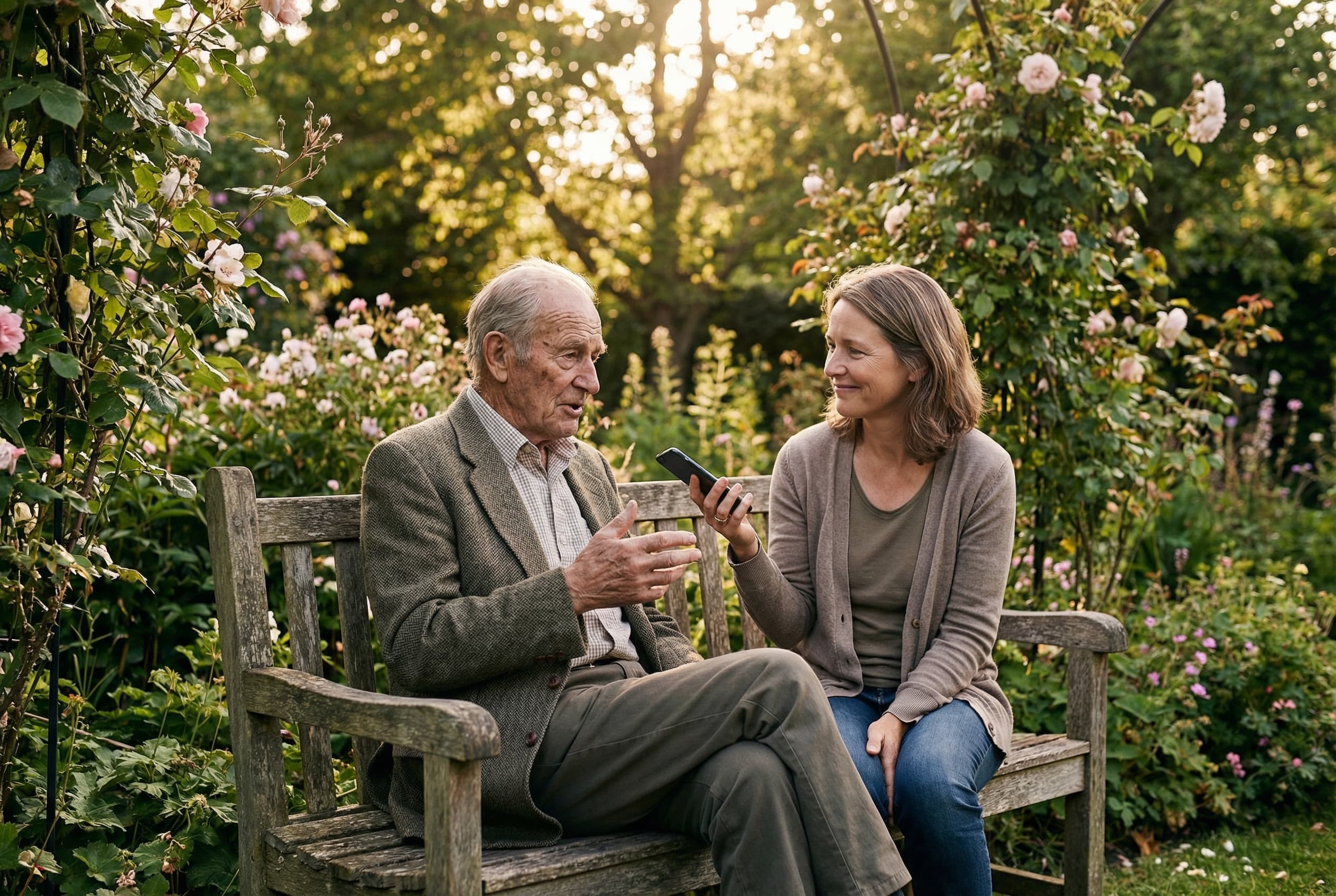
Biography Work: Understanding the Past to Shape the Future
What professionals call "biography work" can transform family conversations too — and it starts with a single question.
Read more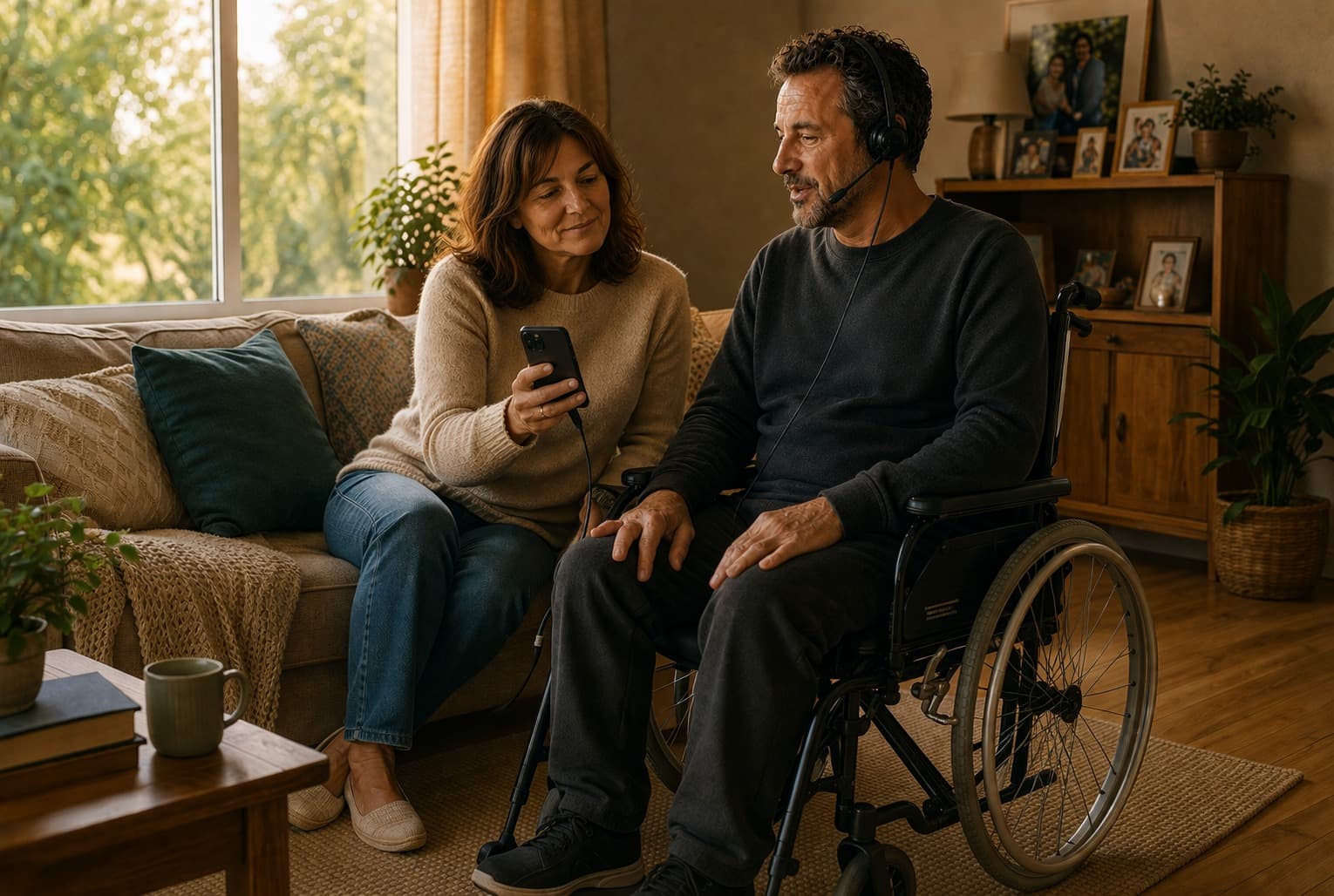
ALS Awareness Month: Why voice, words, and memories matter now
May is ALS Awareness Month. What ALS means, why voice and words become precious — and how blyven can help families preserve memories.
Read more
In the Beginning, It Was Just an Idea
How blyven grew out of personal experiences — and why memories are so precious.
Read more