When a dementia diagnosis arrives in the family, the first response is often paralysis. But there is, especially in the early and middle phases, a window in which stories can still be told vividly — and capturing them has a value that reaches beyond the audio file itself. This article explains what dementia does to memory and offers families practical, dignified guidance.
What dementia actually does to memory
Dementia isn't even memory loss. Simplified: short-term memory degrades first, while very old, episodic memories — childhood, young adulthood, formative life events — often remain accessible for surprisingly long. In the clinical literature this is described as "Ribot's law" and is well documented. Practically: a person with early Alzheimer's may not remember what they had for breakfast but can describe precisely how their grandparents' garden smelled.
Language and musical memory tend to remain accessible longer than cognitive content. This is why music therapy is so effective in moderate dementia and why recordings of songs, poems, or familiar phrases become particularly valuable. A voice singing a lullaby they themselves heard as a child sometimes opens access that clinical tests no longer show.
Reminiscence therapy — briefly and honestly
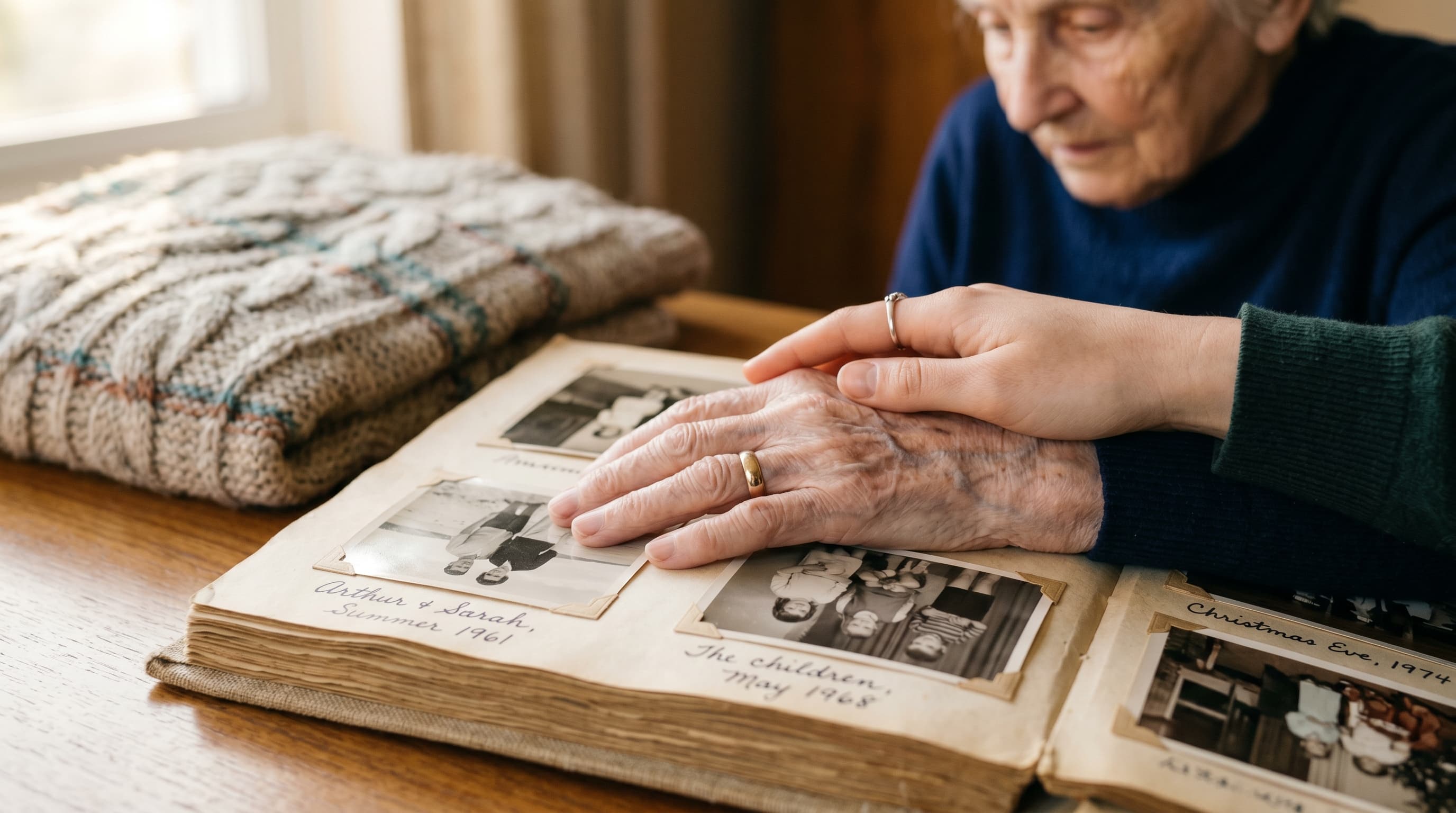
Reminiscence therapy is an established intervention in dementia care. It uses biographical triggers — photos, familiar objects, music, smells — to surface memories and bring them into language. A Cochrane review from 2018 summarises: in people with mild to moderate dementia, there is consistent evidence of positive effects on mood, quality of life, and cognitive engagement. The effect sizes are moderate, not heroic — but they are reproducible.
Important: reminiscence therapy doesn't replace medical treatment, and it isn't suitable for every phase. In very late stages, deliberately recalling old memories can trigger stress if the person notices they can no longer orient themselves. Validation therapy (Naomi Feil) is the more respectful approach in that case. Early and middle phases are the window in which classical reminiscence work has the most consistent benefit.
When's the right time to record?
After diagnosis and during the first one to three years is usually the most productive phase. The person is aware of the change but can still tell complex, connected stories. Many actually find it good for them to record something "for posterity" — it gives the experience a task, a purpose beyond the illness.
A common mistake is to wait until "the right moment." It never quite arrives. blyven is built for exactly the small, regular form: the "Reminiscence" Storybook bundles questions designed to work with concrete memory anchors — familiar places, childhood smells, songs. Fifteen minutes in the morning, one question, a cup of tea. If a recording grows long, you can pause and continue later.
Recording is still meaningful in middle phases if the method is adapted. Instead of open questions, use concrete triggers — and blyven helps directly: you can attach a photo to a recording, play a familiar song in the background, or choose a shorter, sensory question from the guided Storybooks. Let unfinished sentences stand — there's no minimum recording length.
Practical tips for families
Avoid quiz questions. "Do you remember who that was?" puts the person under pressure and amplifies precisely what one wants to hide — the gaps. Better phrasings: "Tell me about this photo" or "What was your favourite Sunday dish back then?" You're asking about lived experience, not factual recall.
Plan short rather than long. Twenty minutes in the morning is worth more than two hours in the evening. blyven stores each recording individually and searchably (with transcription on paid plans). You can record the same themes repeatedly without hesitation — people with dementia often tell the same story multiple times, each time with a different detail. blyven doesn't require continuity from a previous recording; each is complete in itself.
Common questions from families
- What if the person no longer remembers?
- Recording doesn't have to mean documenting a coherent life story. Voice alone has value. Recordings of songs, familiar phrases, shared laughter, or a quiet walk are just as valuable — sometimes more.
- Isn't it disrespectful to record someone with dementia?
- Only when done without knowledge or consent. Always ask beforehand, even if you're not sure the answer will be remembered. Dignity lives in the gesture of asking, not in the legal-technical concept. In advanced phases, "informed assent" — the felt, present-moment consent — is the right standard, not a past consent form.
- Should we share the recordings with the care facility?
- That can be very helpful, but it's voluntary. blyven supports it explicitly: through a family circle you can release individual recordings to the facility without exposing the whole library. The voices of family members are demonstrably calming in stressful situations — this is now widely acknowledged in care standards. When agreed with the facility, blyven covers the data-processing-agreement requirements.
- When is it too late?
- It's never entirely too late, but the goal should adapt. In very late phases, it's no longer about narrative — it's about presence. Even ten minutes of jointly looking at an album, with audio, is a valuable recording for the family, now and later.
Start with one gentle, short recording
Pick a Storybook designed for memory triggers — or record freely. Either works. Recordings are stored encrypted in the EU and shared only with the people you invite.
Start a recordingRead next
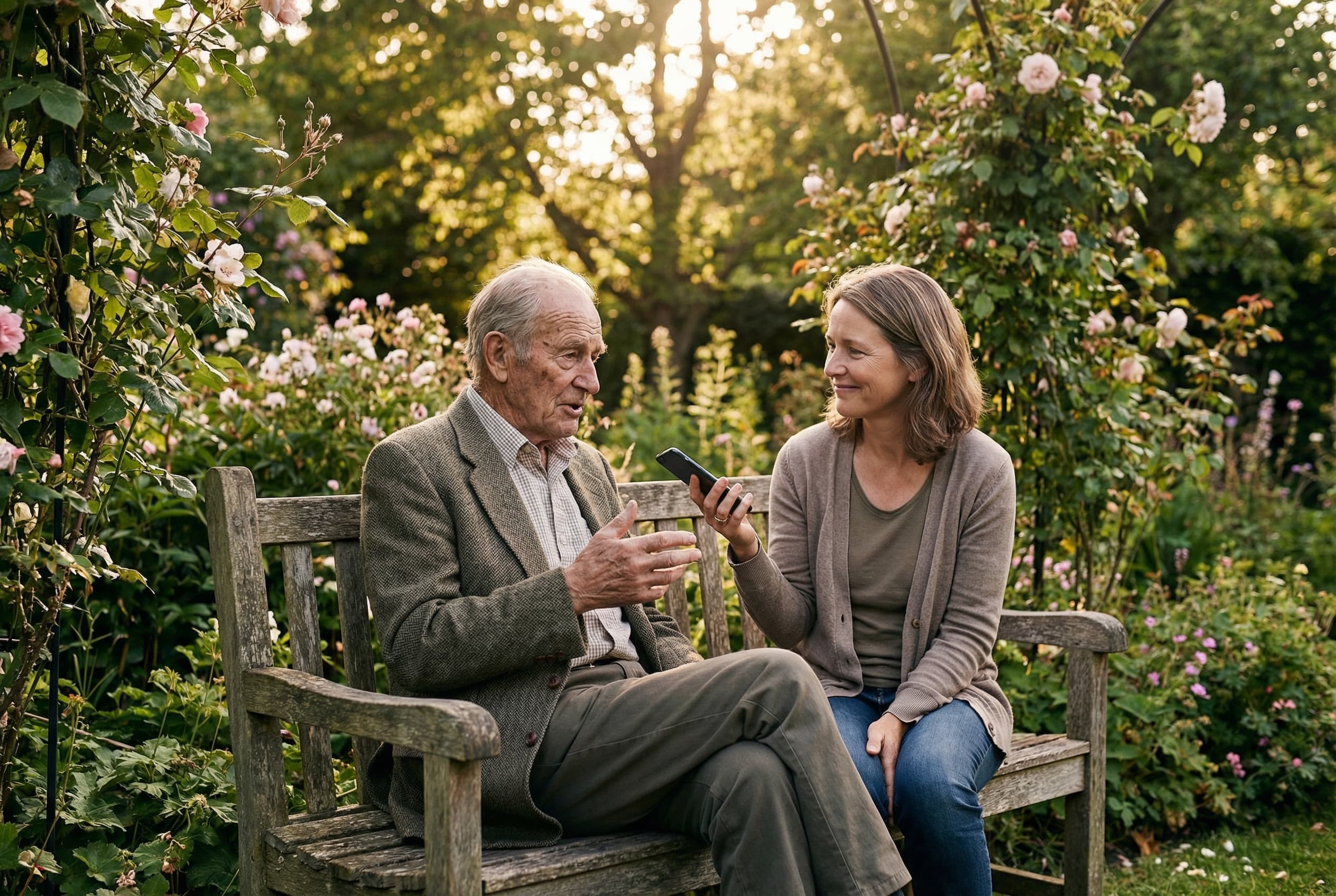
Biography Work: Understanding the Past to Shape the Future
What professionals call "biography work" can transform family conversations too — and it starts with a single question.
Read more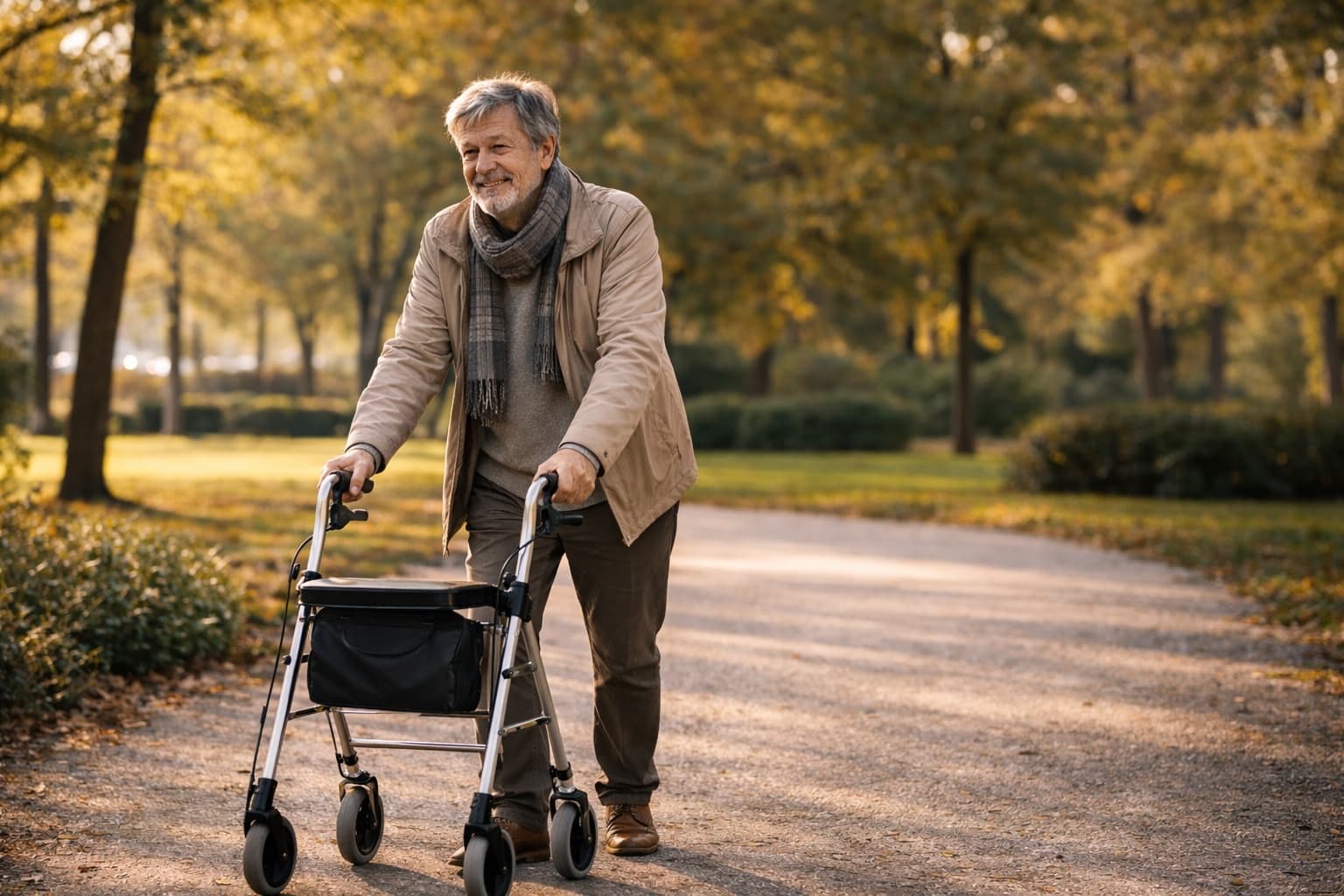
Parkinson's hypophonia: how to preserve the voice
Hypophonia is the softening voice of Parkinson's. Why to start recording now — and how to capture a parent's voice at home with almost no setup.
Read more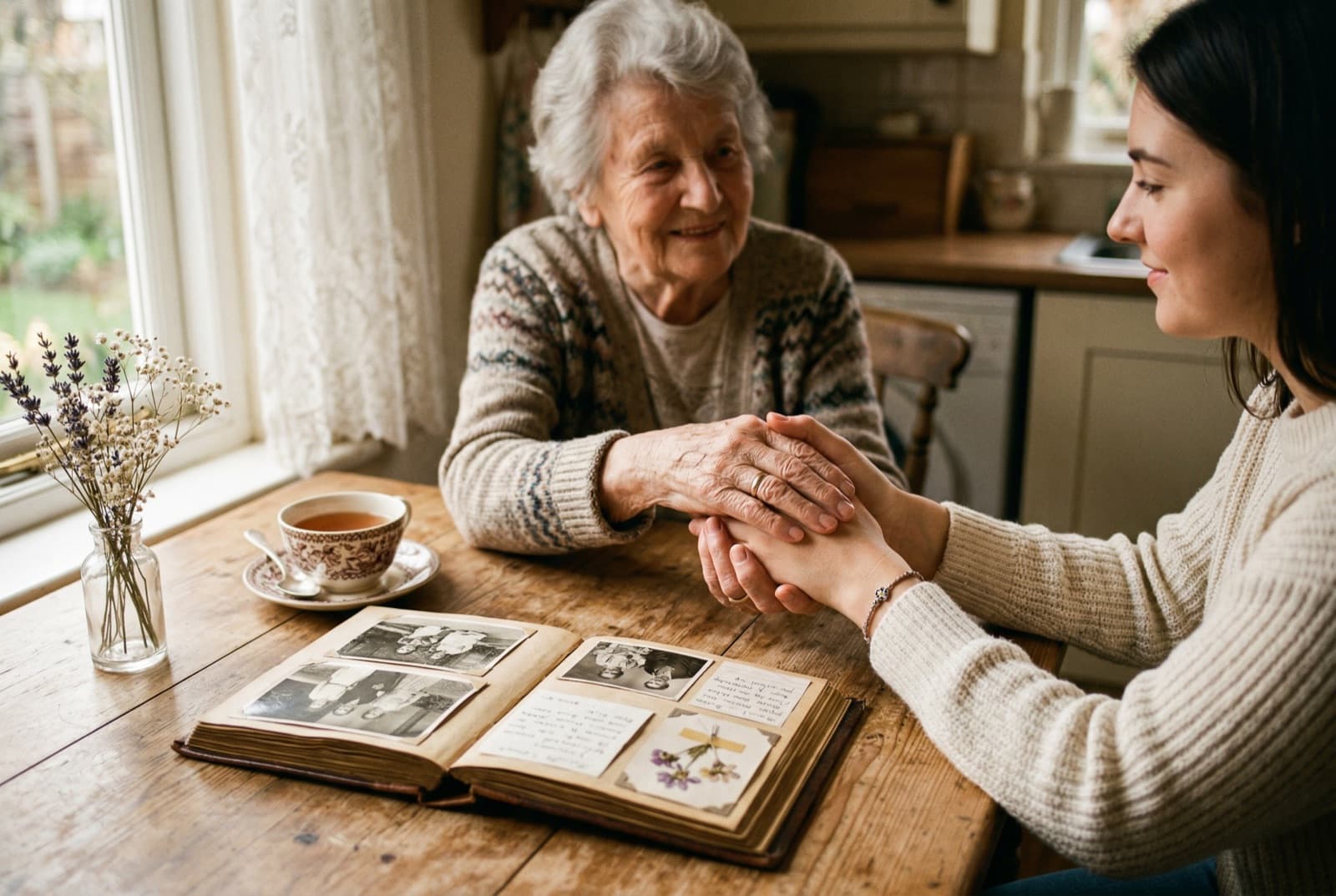
Questions I Would Ask My Grandparents
30 meaningful questions to preserve your grandparents' stories, wisdom, and memories — before it's too late.
Read more